
Exploring the realm of exterior siding installation, this guide delves into the various aspects of this crucial home improvement project. From selecting the right siding materials to the final finishing touches, this comprehensive overview will equip you with the knowledge needed to tackle your siding installation with confidence.
As we navigate through the different types of siding, preparation steps, installation process, and maintenance tips, you'll gain a deeper understanding of how to enhance the curb appeal and durability of your home through proper exterior siding installation.
Types of Exterior Siding
When it comes to choosing exterior siding for your home, there are several popular options that offer different benefits and drawbacks. Each type of siding material has its own unique characteristics that can impact the look, durability, and maintenance of your home.
Vinyl Siding
Vinyl siding is one of the most commonly used materials for exterior siding due to its affordability and low maintenance. It comes in a variety of colors and styles, making it a versatile option for many homeowners. However, vinyl siding can crack or fade over time, and it may not offer the same level of insulation as other materials.
Fiber Cement Siding
Fiber cement siding is a durable and long-lasting option that mimics the look of wood without the high maintenance. It is resistant to rot, fire, and pests, making it a popular choice for many homeowners. However, fiber cement siding can be more expensive upfront and may require professional installation.
Wood Siding
Wood siding offers a natural and timeless look that can add warmth and character to a home. It is available in a variety of species, such as cedar or redwood, each with its own unique grain and color variations. However, wood siding requires regular maintenance, such as painting or staining, to prevent rot and decay.
Brick Siding
Brick siding is a classic and durable option that can add charm and elegance to a home. It is fire-resistant, low maintenance, and offers excellent insulation properties. However, brick siding can be costly to install and may require specialized skills for repairs or replacements.Overall, the choice of exterior siding material depends on factors such as budget, maintenance preferences, and architectural style.
By considering the pros and cons of each type of siding material, homeowners can make an informed decision to enhance the curb appeal and functionality of their homes.
Preparation for Installation
Before starting the installation of exterior siding, it is crucial to properly prepare the house to ensure a smooth and successful process.
Necessary Steps
- Inspect the existing siding for any damage or rot that needs to be repaired before installation.
- Clean the exterior walls thoroughly to remove dirt, dust, and any debris that could affect the siding installation.
- Ensure proper waterproofing and insulation are in place to protect the house from moisture and improve energy efficiency.
- Remove any obstacles or items that may hinder the installation process, such as plants, furniture, or decorations.
Tools and Equipment
- Siding nailer or hammer
- Tape measure
- Level
- Utility knife
- Caulking gun
- Ladder or scaffolding
Checklist of Tasks
- Repair any damaged areas on the existing siding.
- Clean the exterior walls thoroughly.
- Apply waterproofing and insulation as needed.
- Clear the work area of any obstacles.
- Gather all necessary tools and equipment.
Finishing Touches and Maintenance
After installing exterior siding, it is crucial to focus on finishing touches and maintenance to ensure the longevity and durability of the siding. Proper caulking and painting, along with regular upkeep, are essential to protect the siding from weather elements and potential damage.
Importance of Caulking and Painting
Finishing touches like caulking and painting play a significant role in sealing the siding and protecting it from moisture, insects, and other external factors. Caulking helps to fill in gaps and cracks, preventing water infiltration, while painting adds an extra layer of protection against UV rays and inclement weather.
Tips for Maintenance
- Regularly inspect the siding for any signs of damage, such as cracks, peeling paint, or mold growth, and address them promptly.
- Clean the siding at least once a year with a mild detergent and water to remove dirt, debris, and mildew that can accumulate over time.
- Trim any overhanging trees or bushes near the siding to prevent damage from branches and leaves rubbing against the surface.
- Repaint or touch up the paint as needed to maintain the protective layer and enhance the curb appeal of your home.
Common Issues and Solutions
- Cracking:Over time, siding may develop cracks due to temperature changes or settling of the house. To address this, fill the cracks with caulking or replace the damaged sections.
- Fading:Exposure to sunlight can cause the paint on siding to fade. Repaint the siding with UV-resistant paint to restore its color and protect it from further fading.
- Mold and Mildew:Moisture buildup can lead to mold and mildew growth on the siding. Clean the affected areas with a mixture of water and bleach to remove the mold and prevent regrowth.
- Warped Panels:Warping can occur due to improper installation or moisture absorption. Replace the warped panels and address any underlying moisture issues to prevent future warping.
Outcome Summary
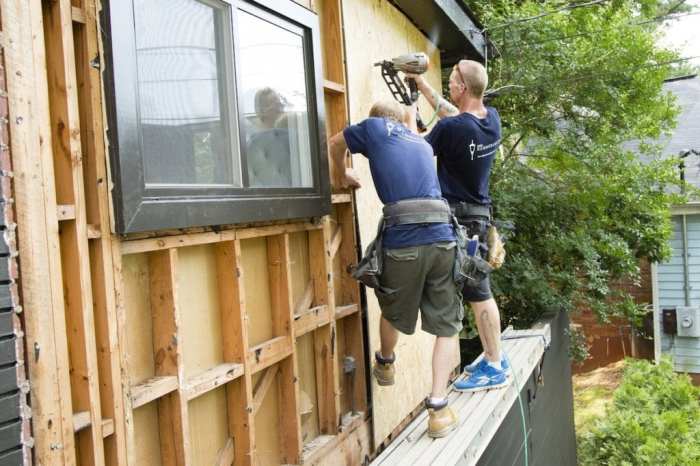
In conclusion, mastering exterior siding installation is not just about improving the aesthetics of your home, but also ensuring its structural integrity and longevity. By following the guidelines Artikeld in this guide, you can embark on your siding installation journey with clarity and precision, ultimately transforming your house into a beautiful and resilient abode.
FAQ Overview
What are the most common types of exterior siding materials used?
Common types include vinyl, wood, fiber cement, and metal siding, each with their own advantages and disadvantages in terms of durability, maintenance, and cost.
What tools are essential for installing exterior siding?
Tools such as a hammer, nails, tape measure, circular saw, and level are crucial for a successful siding installation project.
How do I maintain exterior siding to ensure longevity?
Regular cleaning, inspections for damage, and promptly addressing any issues like cracks or loose panels can help prolong the lifespan of your exterior siding.
What are common issues that may arise with exterior siding?
Issues like moisture damage, warping, or fading of colors are common with exterior siding. Proper maintenance and timely repairs can mitigate these problems.